

Think of this as Volume 14, Number 15 of A-Clue.com, the online newsletter I’ve written since 1997. Enjoy.
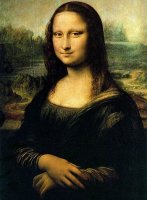 It
It
was a piece of cake. I went to my friend the Google. He found her
quick and sweet.
I
downloaded her, and I
sized her to fit on my virtual wall.
Here
she is. Nice, huh.
Of
course, you say, there’s no copyright on the Mona Lisa. True,
but that doesn’t mean this image isn’t subject to copyright. It
doesn’t mean people aren’t trying to make money off her and trying to
keep me from placing her here.
Take,
for instance, Andrew Hall of Portland. He created a 300 pixel image of her hanging in the Louvre. It’s
got his copyright notice. He’s selling prints of it. I don’t think Leonardo da
Vinci or the Louvre is getting a cut.
No
matter your view on the law, or of me, there are important issues at
stake here, which Mona and I would like to discuss with you.
The
California Digital Library defines images of up to 200 pixels wide as thumbnails..
They are not the actual work. At the top of this post you will not find the actual Mona Lisa. That remains in the Louvre.
Thumbnails
on the Web are protected by a U.S. Appeals court decision.
When I use them, I try to go beyond the law’s requirements. I try to link to
the source, to cite the source, and in the case of art or posters offered for
sale I give people a chance to buy. When someone objects I take the
thumbnail down. Because my own actions on this policy are imperfect I try to be a nice guy, to err on the side of taking stuff down when asked.
But there are limits.
There
is no difference between a thumbnail of an art work and an excerpt
from my blog, or the clips sights like Amazon.com offer of songs.
It’s called fair use. Without fair use debates are stifled, new
voices are stilled, and the market doesn’t function. The whole idea of copyright is to encourage the
new, not enslave us to the old. Fair use is a good thing, and fair
use is what I practice.
We
can disagree on the size of a thumbnail. I like this size. You may
think smaller is better. But until courts rule definitively the
question is open to interpretation. Anyone who thinks hanging a
thumbnail on their wall makes them an art collector has deeper
problems than I can solve.
 The
The
Web is ruled by machines
Back
at the dawn of the Web, Yet Another Hierarchical Officious Oracle
(YAHOO) used teams of people to troll the Web, indexing sites and
pages. Even before the Google appeared this became impractical.
The
directory was replaced with robots and spiders. These crawl the Web
looking for changes, automatically cataloging them, creating links to
their content, and their images. Without such links work can’t be
found.
There
are ways to stop these spiders. If you write a robots.txt file , you can stop robots from indexing the page or elements in the page.
If you use watermarking you can render even a thumbnail worthless.
You can even prevent people from right-clicking and copying what
you’ve created.
But
without automation the Web could not be indexed. It’s too big, it’s
growing all the time. Important pages and images would not be seen.
For
images the robots follow the law noted above. They produce thumbnails
and link people to them. There have been objections, but courts have
sided with the robots.
I want the same rights as a robot.
The
Web as we know it could not exist if human intervention were
required for links or thumbnails. And if machines can do something,
so can I. Do I not have the rights of a machine? Or is the machine
Superman?
Artists
Benefit
This
is the most important and practical point. Artists benefit more from
the Web as it is than from seeking to limit the publicity offered by thumbnails.
 Before
the 20th century, decisions on what was art, on what had merit, on
which artists would thrive and which would starve, were made by
elites. Small numbers of well-connected or wealthy art lovers could
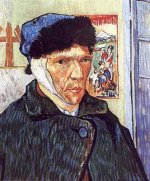
make or break artists. It drove many great artists, like Vincent Van
Gogh here, crazy.
The
whole thrust of 20th century art history lay in democratizing this,
in bringing art to the market. Picasso and Dali were relentless
self-promoters. Andy Warhol was a commercial artist whose point was
to play with connections between the market and high art, and the
whole idea of celebrity.
Art
that is not seen makes no money. Artists make money from new art. The
more their style is recognized the more they can make. A thumbnail
of a piece of art, linked to and credited, is not the object itself,
unless your art is 200 pixels wide or less. Nothing is being stolen.
In fact, something important and valuable is being offered, free,
something vital to the artist.
There
are some artists who feel they don’t need publicity. They think they
should control the Web, prevent thumbnails, overrule the machines,
and intimidate anyone they don’t like who links to them, calling them
a thief.
There’s
a word for such people. Vigilantes. There is another word for them.
Fools. They may claim to be helping artists, to be protecting their
work, but they are only trying to corner the market for themselves.
More
important, the effort is self-defeating. I didn’t really steal the
Mona Lisa. I didn’t steal Van Gogh’s portrait. I can’t display them
on this virtual wall – it’s too small. And the publicity I give new
art is the lifeblood of art. Without it art in the 21st century will
go backward, not forward, and artists whose work is truly new,
shunned by the elites, won’t be found by their audience.
The few artists who might profit from collecting on thumbnails, their agents and lawyers, want to neuter the Web, demanding human intervention before machines can do their work, all in the name of short-term gain.
In the name of all unknown artists (and I count myself among them) I don’t plan on giving in to their demands. You shouldn’t either.






“And the publicity I give new art is the lifeblood of art. Without it art in the 21st century will go backward, not forward, and artists whose work is truly new, shunned by the elites, won’t be found by their audience.”
The “publicity” you provide by posting a stolen image alongside your half-baked screed on whatever issue of the day crosses your mind on a blog is moving 21st century art forward? You have to be the most conceited, self-deluded idiot I’ve ever had the displeasure of coming across. You’re practically begging for a lawsuit.
“And the publicity I give new art is the lifeblood of art. Without it art in the 21st century will go backward, not forward, and artists whose work is truly new, shunned by the elites, won’t be found by their audience.”
The “publicity” you provide by posting a stolen image alongside your half-baked screed on whatever issue of the day crosses your mind on a blog is moving 21st century art forward? You have to be the most conceited, self-deluded idiot I’ve ever had the displeasure of coming across. You’re practically begging for a lawsuit.
You are absolutely crass. You should be ashamed of yourself for what you did in the first place, and now you are trying to justify.
Simple as this, you were wrong. Draw your own damned pictures and turn them into thumbnails for your blog, which is terrible, by the way.
You are absolutely crass. You should be ashamed of yourself for what you did in the first place, and now you are trying to justify.
Simple as this, you were wrong. Draw your own damned pictures and turn them into thumbnails for your blog, which is terrible, by the way.
You are escalating this into a place that is offensive. Calling the illustration community “vigilantes” and “fools” when even CBS comes out to tell you that what you did was wrong? Give me a break. Do you think we’re a bunch of crazy Charles Bronsons for speaking out when something illegal has happened?
Obviously, your definition of “SOME” means an entire industry. We will not back down on our rights when someone blatantly and arrogantly violates them. Who would?
Your definition of a “thumbnail” is also insulting. We specifically sell rights for web usage. A fee is paid to use a web-sized image, often falling within the bounds of what you claim to be a thumbnail. If you were going head to head with a company that had commissioned an illustration you stole, I doubt your language would be quite so hateful.
Illustrators can generate our own publicity, thank you very much. Chris Buzelli is one of the leading illustrators in the field — to assume you are doing him, or anyone, a favor by taking his work is downright absurd. This is not a hobby. It is a livelihood.
You are escalating this into a place that is offensive. Calling the illustration community “vigilantes” and “fools” when even CBS comes out to tell you that what you did was wrong? Give me a break. Do you think we’re a bunch of crazy Charles Bronsons for speaking out when something illegal has happened?
Obviously, your definition of “SOME” means an entire industry. We will not back down on our rights when someone blatantly and arrogantly violates them. Who would?
Your definition of a “thumbnail” is also insulting. We specifically sell rights for web usage. A fee is paid to use a web-sized image, often falling within the bounds of what you claim to be a thumbnail. If you were going head to head with a company that had commissioned an illustration you stole, I doubt your language would be quite so hateful.
Illustrators can generate our own publicity, thank you very much. Chris Buzelli is one of the leading illustrators in the field — to assume you are doing him, or anyone, a favor by taking his work is downright absurd. This is not a hobby. It is a livelihood.
Keep digging your own grave.
Keep digging your own grave.
you are a clueless asshole
you are a clueless asshole
Everyone, please remember to treat this poor man with patience and understanding. He is not well. The diagnosis below explains his mental problems. The best treatment is to ignore him.
Narcissistic personality disorder
Overview: Narcissistic personality disorder is a condition in which there is an inflated sense of self-importance and an extreme preoccupation with one’s self.
Symptoms
A person with narcissistic personality disorder:
* Reacts to criticism with rage, shame, or humiliation
* Takes advantage of other people to achieve his or her own goals
* Has feelings of self-importance
* Exaggerates achievements and talents
* Is preoccupied with fantasies of success, power, beauty, intelligence, or ideal love
* Has unreasonable expectations of favorable treatment
* Requires constant attention and admiration
* Disregards the feelings of others, lacks empathy
* Has obsessive self-interest
* Pursues mainly selfish goals
https://health.google.com/health/ref/Narcissistic+personality+disorder
Everyone, please remember to treat this poor man with patience and understanding. He is not well. The diagnosis below explains his mental problems. The best treatment is to ignore him.
Narcissistic personality disorder
Overview: Narcissistic personality disorder is a condition in which there is an inflated sense of self-importance and an extreme preoccupation with one’s self.
Symptoms
A person with narcissistic personality disorder:
* Reacts to criticism with rage, shame, or humiliation
* Takes advantage of other people to achieve his or her own goals
* Has feelings of self-importance
* Exaggerates achievements and talents
* Is preoccupied with fantasies of success, power, beauty, intelligence, or ideal love
* Has unreasonable expectations of favorable treatment
* Requires constant attention and admiration
* Disregards the feelings of others, lacks empathy
* Has obsessive self-interest
* Pursues mainly selfish goals
https://health.google.com/health/ref/Narcissistic+personality+disorder
I applaud your stubborn misinterpretation of copyright law. It is entertaining, and I have learned much from the eloquent responses your critics have dropped on you.
I applaud your stubborn misinterpretation of copyright law. It is entertaining, and I have learned much from the eloquent responses your critics have dropped on you.
Please stop stealing.
Please stop stealing.
You seemed to have neglected reading the last part on the one ‘thumbnail’ ruling:
How to stay out of trouble:
1. NEVER inline link or upload images that don’t belong to you, without the owner’s permission.
2. ALWAYS purchase or use creative license pictures if possible.
3. CONSIDER that even though courts have stated that thumbnails CAN fall under the fair use exception, it doesn’t mean that all thumbnails are necessarily legal. There are four factors that court’s use to decide if something qualifies for fair use, and given that only a few courts have considered the issue, don’t be surprised if some thumbnails that don’t meet the four factors are deemed illegal.
You admitted using copyrighted work without permission and for profit because you were too lazy to ask for permission. Based upon the actual Fair Use law, what you did and continue doing is illegal.
“Acknowledging the source of the copyrighted material does not substitute for obtaining permission.”
http://www.copyright.gov/fls/fl102.html
Scott Bakal
You seemed to have neglected reading the last part on the one ‘thumbnail’ ruling:
How to stay out of trouble:
1. NEVER inline link or upload images that don’t belong to you, without the owner’s permission.
2. ALWAYS purchase or use creative license pictures if possible.
3. CONSIDER that even though courts have stated that thumbnails CAN fall under the fair use exception, it doesn’t mean that all thumbnails are necessarily legal. There are four factors that court’s use to decide if something qualifies for fair use, and given that only a few courts have considered the issue, don’t be surprised if some thumbnails that don’t meet the four factors are deemed illegal.
You admitted using copyrighted work without permission and for profit because you were too lazy to ask for permission. Based upon the actual Fair Use law, what you did and continue doing is illegal.
“Acknowledging the source of the copyrighted material does not substitute for obtaining permission.”
http://www.copyright.gov/fls/fl102.html
Scott Bakal
Are you just being purposefully confrontational? You can’t be nearly as ignorant as you sound. Your knowledge and understanding of contemporary art practices is laughable. I realize you must feel like you have been backed into a corner, but you can’t honestly expect a group of people who have made the study of art and illustration their life to take any of your naive arguments seriously?
Are you just being purposefully confrontational? You can’t be nearly as ignorant as you sound. Your knowledge and understanding of contemporary art practices is laughable. I realize you must feel like you have been backed into a corner, but you can’t honestly expect a group of people who have made the study of art and illustration their life to take any of your naive arguments seriously?
“The few artists who might profit from collecting on thumbnails, their agents and lawyers, want to neuter the Web, demanding human intervention before machines can do their work, all in the name of short-term gain. ”
This could not be further from the truth. The reward for having your images lifted and posted on a some writers blog, the “Free Publicity” you speak of, THAT is a short term gain for an artist. Integrity and Ethics are not.
“The few artists who might profit from collecting on thumbnails, their agents and lawyers, want to neuter the Web, demanding human intervention before machines can do their work, all in the name of short-term gain. ”
This could not be further from the truth. The reward for having your images lifted and posted on a some writers blog, the “Free Publicity” you speak of, THAT is a short term gain for an artist. Integrity and Ethics are not.
Actually, “Andrew Hall of Portland” is NOT selling prints of the Mona Lisa. Rather, this picture on my website is merely was one of thousands of pictures watermarked in bulk on my website including many from Europe. (I do sell prints of my work but not of museum pieces). I had forgotten that my Mona Lisa snapshot was even on my site – no one has ever attempted to buy a print nor would I bother to sell one, in part because the quality would be crappy from this hand-held picture (though on the web it looks OK).
Sorry to destroy the premise of your blog post…
Actually, “Andrew Hall of Portland” is NOT selling prints of the Mona Lisa. Rather, this picture on my website is merely was one of thousands of pictures watermarked in bulk on my website including many from Europe. (I do sell prints of my work but not of museum pieces). I had forgotten that my Mona Lisa snapshot was even on my site – no one has ever attempted to buy a print nor would I bother to sell one, in part because the quality would be crappy from this hand-held picture (though on the web it looks OK).
Sorry to destroy the premise of your blog post…
I cannot believe this response from you, Blankenhorn. Your analogies and comparisons are ridiculous and you continue to ignore the point of all of this. We aren’t trying to control the internet, we’re trying to protect ourselves just as anyone else with a business would. It’s that simple. You’re completely twisting the issue and it’s extremely insulting. Swallow your misguided pride and stop already.
I cannot believe this response from you, Blankenhorn. Your analogies and comparisons are ridiculous and you continue to ignore the point of all of this. We aren’t trying to control the internet, we’re trying to protect ourselves just as anyone else with a business would. It’s that simple. You’re completely twisting the issue and it’s extremely insulting. Swallow your misguided pride and stop already.
It’s sad that Dana keeps arguing that he has already apologized, then continues to argue his ass-backwards point in new blogs. If he were truly apologetic, he would concede the point and SHUT THE F*CK UP about the subject.
Dana,
You are painfully, obviously in the wrong, and you have no real argument or basis in fact beyond the half-truths you are pulling off the internet without completely reading or quoting those factoids you reference. The fact of the matter is, artists create an IMAGE, and have the rights to said IMAGE. The size of said image does not negate their rights to that image– the size of the image is irrelevant. And besides that, all you had to do was ask them if you could use the image, no matter the size.
So just write a blog that simply reads “Sorry, I did in fact break the law and won’t do it again.” Period. Then leave this whole subject alone, man! Until you do so, The more you push this, the more trouble you’re setting up for yourself.
It’s sad that Dana keeps arguing that he has already apologized, then continues to argue his ass-backwards point in new blogs. If he were truly apologetic, he would concede the point and SHUT THE F*CK UP about the subject.
Dana,
You are painfully, obviously in the wrong, and you have no real argument or basis in fact beyond the half-truths you are pulling off the internet without completely reading or quoting those factoids you reference. The fact of the matter is, artists create an IMAGE, and have the rights to said IMAGE. The size of said image does not negate their rights to that image– the size of the image is irrelevant. And besides that, all you had to do was ask them if you could use the image, no matter the size.
So just write a blog that simply reads “Sorry, I did in fact break the law and won’t do it again.” Period. Then leave this whole subject alone, man! Until you do so, The more you push this, the more trouble you’re setting up for yourself.
“I get paid for what I write, not for the illustrations accompanying them. If I had to get permission for every illustration I used I wouldn’t have time to get any illustrations on my articles and would likely not make any money. No one is going to take a 200 pixel reproduction of a larger piece and call it art. No one is using it as anything but eye candy, and those who like it are going to use links to seek it, and the artist, out. ”
Having said that, do you agree then with the following statement?
“I get paid for what I illustrate, not for the articles accompanying them. If I had to get permission for every article I used I wouldn’t have time to get any articles for my illustrations and would likely not make any money. No one is going to take a 2,000 word reprint of an article and call it writing. No one is using it as anything but jargon, and those who like it are going to use links to seek the original article and its writer, out.”
“I get paid for what I write, not for the illustrations accompanying them. If I had to get permission for every illustration I used I wouldn’t have time to get any illustrations on my articles and would likely not make any money. No one is going to take a 200 pixel reproduction of a larger piece and call it art. No one is using it as anything but eye candy, and those who like it are going to use links to seek it, and the artist, out. ”
Having said that, do you agree then with the following statement?
“I get paid for what I illustrate, not for the articles accompanying them. If I had to get permission for every article I used I wouldn’t have time to get any articles for my illustrations and would likely not make any money. No one is going to take a 2,000 word reprint of an article and call it writing. No one is using it as anything but jargon, and those who like it are going to use links to seek the original article and its writer, out.”
Your blog isn’t a search engine. Suggesting that your lightly trafficked site with your musings do the same job as Google is laughable.
And it’s absolutely ridiculous that you think that your blog, which you get paid to write, should be free to take others content, without their permission, in exchange for a link. Your bosses at CBS won’t even back you up on this.
As a creator, I have final say over how my work is used. I can restrict its use or let the world have it for free. At the end of the day though, its my decision. Shame on you for suggesting that the internet and its users should be able to take away my rights and property.
You should practice what you preach – stop being a slave to the images that already exist create something new. And if you can’t create something new hire some one who will do it for you
Your blog isn’t a search engine. Suggesting that your lightly trafficked site with your musings do the same job as Google is laughable.
And it’s absolutely ridiculous that you think that your blog, which you get paid to write, should be free to take others content, without their permission, in exchange for a link. Your bosses at CBS won’t even back you up on this.
As a creator, I have final say over how my work is used. I can restrict its use or let the world have it for free. At the end of the day though, its my decision. Shame on you for suggesting that the internet and its users should be able to take away my rights and property.
You should practice what you preach – stop being a slave to the images that already exist create something new. And if you can’t create something new hire some one who will do it for you
So, I thought to myself, “Great! We can take what we want!!” So, I started to copy your text to use it elsewhere. (Because I can – under your new world order) Then I started to read the incoherent gibberish that you so lovingly crafted. It was then that I realized why you need to steal illustration – to make your dry, confused rhetoric more appealing.
You seem desperate and sad. In a lonely, guy-who-sits-alone-at-family-gatherings kind of way.
So, I thought to myself, “Great! We can take what we want!!” So, I started to copy your text to use it elsewhere. (Because I can – under your new world order) Then I started to read the incoherent gibberish that you so lovingly crafted. It was then that I realized why you need to steal illustration – to make your dry, confused rhetoric more appealing.
You seem desperate and sad. In a lonely, guy-who-sits-alone-at-family-gatherings kind of way.
Some artists who are commenting on the issue at hand are losing credibility by saying things like “you are unwell” and “you seem desperate and sad”.
Yes, it’s a sensitive issue that needs to be discussed, but let’s act like the professionals that we all claim to be.
Some artists who are commenting on the issue at hand are losing credibility by saying things like “you are unwell” and “you seem desperate and sad”.
Yes, it’s a sensitive issue that needs to be discussed, but let’s act like the professionals that we all claim to be.
“I get paid for what I write, not for the illustrations accompanying them. If I had to get permission for every illustration I used I wouldn’t have time to get any illustrations on my articles and would likely not make any money.”
So you’re claiming that without illustrations, your writing wouldn’t make money. So then it’s the illustrations making the money. And you aren’t creating the illustrations. Interesting. I would agree your words are worthless.
“I get paid for what I write, not for the illustrations accompanying them. If I had to get permission for every illustration I used I wouldn’t have time to get any illustrations on my articles and would likely not make any money.”
So you’re claiming that without illustrations, your writing wouldn’t make money. So then it’s the illustrations making the money. And you aren’t creating the illustrations. Interesting. I would agree your words are worthless.
I think professionalism went out the window a long time ago, Jackie. Dana’s arrogance regarding his inability to understand the law and the internet are going to ensure him a lawsuit and a leap into a new career. One where they don’t use Google in background searches.
There’s no way anyone is going to take him seriously anymore, and the internet will continue to follow him and make sure of it.
So your statement that artists are losing credibility to a man who is throwing his career out the window doesn’t really go to show much, and it’s also very possible that his soapbox attitude does reflect on his mental stability, regardless of if anyone here has the right to make that call or not.
I think professionalism went out the window a long time ago, Jackie. Dana’s arrogance regarding his inability to understand the law and the internet are going to ensure him a lawsuit and a leap into a new career. One where they don’t use Google in background searches.
There’s no way anyone is going to take him seriously anymore, and the internet will continue to follow him and make sure of it.
So your statement that artists are losing credibility to a man who is throwing his career out the window doesn’t really go to show much, and it’s also very possible that his soapbox attitude does reflect on his mental stability, regardless of if anyone here has the right to make that call or not.
You are raging and foaming at the mouth at the storm that you created when better informed and more intelligent people than yourself have clearly pointed out the massive flaws in your arguments. Even your bosses at CBS found your views ridiculous. I won’t bother to argue why your points are wrong, as it’s abundantly clear that you don’t actually listen.
You are raging and foaming at the mouth at the storm that you created when better informed and more intelligent people than yourself have clearly pointed out the massive flaws in your arguments. Even your bosses at CBS found your views ridiculous. I won’t bother to argue why your points are wrong, as it’s abundantly clear that you don’t actually listen.
Why do you call it “the Google,” Dana?
Why do you call it “the Google,” Dana?
You are ignorant. Your words are condescending and mock artists worldwide. Do you actually believe that you are keeping the art industry afloat by illegally placing thumbnails of art on your posts? I could show your work to everyone I’m in contact with, but I doubt I would drum up a single penny for you simply because the people I know don’t give a damn about the field you work in.
Then there are the ‘tools’ you ‘offer’ for us to protect our work, as if you are educating artists everywhere. What do you expect in return? “Oh seriously? For real? You are giving me links and everything? Why thank you Dana, now I don’t need to worry!”
This should have ended with a sincere apology. Instead you condescend, trying to teach artists their own field. I hope your superiors re-educate you soon.
You are ignorant. Your words are condescending and mock artists worldwide. Do you actually believe that you are keeping the art industry afloat by illegally placing thumbnails of art on your posts? I could show your work to everyone I’m in contact with, but I doubt I would drum up a single penny for you simply because the people I know don’t give a damn about the field you work in.
Then there are the ‘tools’ you ‘offer’ for us to protect our work, as if you are educating artists everywhere. What do you expect in return? “Oh seriously? For real? You are giving me links and everything? Why thank you Dana, now I don’t need to worry!”
This should have ended with a sincere apology. Instead you condescend, trying to teach artists their own field. I hope your superiors re-educate you soon.
Dana, just give it up. You were wrong. You sound like a child trying to justify why he stole candy by saying “Well it was right there in front of me, out in the open.”
Dana, just give it up. You were wrong. You sound like a child trying to justify why he stole candy by saying “Well it was right there in front of me, out in the open.”
Dana, no matter how you spin this story, you are still an asshole.
I think I’ll go create some 200 pixel-wide artwork just to show how full of shit you can be.
Dana, no matter how you spin this story, you are still an asshole.
I think I’ll go create some 200 pixel-wide artwork just to show how full of shit you can be.
I have a better idea for you, actually. You should *charge* the artist for the privilege of stealing their work, since you clearly think that you are advertising for them. If your space is so valuable, then you should be getting paid for it. Or is that your next essay?
This “thumbnail” argument and comparing it to an excerpt of your article is ludicrous, because an excerpt is a quote snipped from a larger piece, a thumbnail is usually that whole piece sized down. But that’s just one of a thousand dim points of artificial light you are trying to amplify into truth. Listen, a righteous man wouldn’t be acting the way you are. A righteous man would be content in his being right, and he would go full-steam ahead. The dishonest man tries to con his way out of a situation by saying, “I’m going to change my behavior because you object, event though you are wrong.” That’s like Larry Craig agreeing to plead guilty to an illicit act, only to later say he was an innocent man trying to calm the waters. Innocent men don’t cop to illicit acts, and men who are right in their convictions don’t alter those convictions to please others. You committed an illicit act, and you’ve been caught, and the fact that you try to keep re-framing the argument just adds further embarrassment to the whole thing.
I have a better idea for you, actually. You should *charge* the artist for the privilege of stealing their work, since you clearly think that you are advertising for them. If your space is so valuable, then you should be getting paid for it. Or is that your next essay?
This “thumbnail” argument and comparing it to an excerpt of your article is ludicrous, because an excerpt is a quote snipped from a larger piece, a thumbnail is usually that whole piece sized down. But that’s just one of a thousand dim points of artificial light you are trying to amplify into truth. Listen, a righteous man wouldn’t be acting the way you are. A righteous man would be content in his being right, and he would go full-steam ahead. The dishonest man tries to con his way out of a situation by saying, “I’m going to change my behavior because you object, event though you are wrong.” That’s like Larry Craig agreeing to plead guilty to an illicit act, only to later say he was an innocent man trying to calm the waters. Innocent men don’t cop to illicit acts, and men who are right in their convictions don’t alter those convictions to please others. You committed an illicit act, and you’ve been caught, and the fact that you try to keep re-framing the argument just adds further embarrassment to the whole thing.
What part of “it’s not your artwork” is so beyond your comprehension that you insist on trying to defend a position that is patently absurd?
What part of “it’s not your artwork” is so beyond your comprehension that you insist on trying to defend a position that is patently absurd?
I’m amused that in the hundreds of comments here and on the other two blog posts that created this furore, there’s not a single comment that chimes in on Dana’s side. Doesn’t that tell you something, Dana? That hundreds of people, including a copyright lawyer and your own employers, are united against you, and literally NO ONE agrees with you? Maybe it’s not as complex an issue and worthy of debate as you thought, and you’re simply wrong about it.
Occam’s Razor, my friend – the simplest explanation is probably the correct one. Either you’re a stubborn fool who can’t admit that he’s wrong even when there’s a crashing tide of contrary opinion and evidence, or you and you alone are correct, and are valiantly fighting your lonely war against a world in delusion.
Man up.
I’m amused that in the hundreds of comments here and on the other two blog posts that created this furore, there’s not a single comment that chimes in on Dana’s side. Doesn’t that tell you something, Dana? That hundreds of people, including a copyright lawyer and your own employers, are united against you, and literally NO ONE agrees with you? Maybe it’s not as complex an issue and worthy of debate as you thought, and you’re simply wrong about it.
Occam’s Razor, my friend – the simplest explanation is probably the correct one. Either you’re a stubborn fool who can’t admit that he’s wrong even when there’s a crashing tide of contrary opinion and evidence, or you and you alone are correct, and are valiantly fighting your lonely war against a world in delusion.
Man up.
Guys. If you look at his articles on SmartPlanet and compare the number of comments on each with the number on this subject, you will find that his stubbornness has made Mr. Dana a bit of a celebrity. I do believe that he won’t back down because hits to his article and web page have gone through the roof. As creators we know we’re right. I think maybe we should let Mr. Dana sink back into obscurity where he came from.
Guys. If you look at his articles on SmartPlanet and compare the number of comments on each with the number on this subject, you will find that his stubbornness has made Mr. Dana a bit of a celebrity. I do believe that he won’t back down because hits to his article and web page have gone through the roof. As creators we know we’re right. I think maybe we should let Mr. Dana sink back into obscurity where he came from.
The fact that not a single artist has come to your defense speaks volumes, not to mention that you completely fail to understand copyright/fair use laws is astounding to say the least.
Are you familiar with journalism standards and ethics?
The fact that not a single artist has come to your defense speaks volumes, not to mention that you completely fail to understand copyright/fair use laws is astounding to say the least.
Are you familiar with journalism standards and ethics?
The mona lisa falls under ‘public domain’ use…bad example to use
…but to your way of thinking, if my child was in your kitchen and saw your credit card your counter and she took it…she would have every right to do so….afterall…it was just sitting there out in the open…furthermore…it would be your fault that my child stole your credit card because you left it there unattended…and besides, it’s not REALLY money after all…it just REPRESENTS money…yeah…that makes sense…
The mona lisa falls under ‘public domain’ use…bad example to use
…but to your way of thinking, if my child was in your kitchen and saw your credit card your counter and she took it…she would have every right to do so….afterall…it was just sitting there out in the open…furthermore…it would be your fault that my child stole your credit card because you left it there unattended…and besides, it’s not REALLY money after all…it just REPRESENTS money…yeah…that makes sense…
I’m a 21 year old student in Norway, studying Media and Communications, and one of the first things we learned is how using content without the creators permission is a fully sueable offense.
It amazes me that you will go to such lengths to try and “prove” your innocent and right in this.
You could have just gone “My appologies, I did not mean any offense.” and there would have been no problem and you would have seen like the bigger man in this.
But no, you have to sink to kindergarten level by going “It’s their fault, not mine.”
Grow up, face the music, learn the rules and do what’s right.
I’m a 21 year old student in Norway, studying Media and Communications, and one of the first things we learned is how using content without the creators permission is a fully sueable offense.
It amazes me that you will go to such lengths to try and “prove” your innocent and right in this.
You could have just gone “My appologies, I did not mean any offense.” and there would have been no problem and you would have seen like the bigger man in this.
But no, you have to sink to kindergarten level by going “It’s their fault, not mine.”
Grow up, face the music, learn the rules and do what’s right.
Man: why don´t you just write and stop stealing??? If you want to enrich your article with an image, just pay for it. If you don´t want to pay, don´t use images in your articles.
As simple as that.
Man: why don´t you just write and stop stealing??? If you want to enrich your article with an image, just pay for it. If you don´t want to pay, don´t use images in your articles.
As simple as that.
Art that is not seen makes no money. Artists make money from new art.
Not true. Many prominent and burgeoning artists never show publicly what they sell privately. I am an art dealer…a paid professional…not some entitled blogger who should have CBS withholding my pay because I’m using art WITHOUT PERMISSION.
You’re logic suggests I can use anything you write so long as it’s part of my story. I can cut and paste your arrogant words, expand on it, and that’s OK.
Do you want to be plagiarized?
There are some artists who feel they don’t need publicity.
True, that’s because they are working privately and the image is paid for/owned/and not for your use. Respect that. Seriously if any of my vulturous legal friends have any time to do something about this I will gladly introduce them to the artist and whoever pays you for yoru opinion on that lousy site.
You’re a fat-faced BLOGGER. Out of my way, I’m BLOGGING- look at my profile picture, it’s just like the ones they use in the Wall Street Journal, except mine’s a THUMBNAIL of me with uncombed hair standing on my porch.
THIS WILL NOT END UNTIL YOU APOLOGIZE SHITDICK. YOU SHOULD READ ALL THE TWEETS AND SEE WHAT PEOPLE ARE PREPARING TO DO TO YOU…LEGALLY.
Art that is not seen makes no money. Artists make money from new art.
Not true. Many prominent and burgeoning artists never show publicly what they sell privately. I am an art dealer…a paid professional…not some entitled blogger who should have CBS withholding my pay because I’m using art WITHOUT PERMISSION.
You’re logic suggests I can use anything you write so long as it’s part of my story. I can cut and paste your arrogant words, expand on it, and that’s OK.
Do you want to be plagiarized?
There are some artists who feel they don’t need publicity.
True, that’s because they are working privately and the image is paid for/owned/and not for your use. Respect that. Seriously if any of my vulturous legal friends have any time to do something about this I will gladly introduce them to the artist and whoever pays you for yoru opinion on that lousy site.
You’re a fat-faced BLOGGER. Out of my way, I’m BLOGGING- look at my profile picture, it’s just like the ones they use in the Wall Street Journal, except mine’s a THUMBNAIL of me with uncombed hair standing on my porch.
THIS WILL NOT END UNTIL YOU APOLOGIZE SHITDICK. YOU SHOULD READ ALL THE TWEETS AND SEE WHAT PEOPLE ARE PREPARING TO DO TO YOU…LEGALLY.
DANA: you have a girls name, go comb your shitty beard with a shotgun.
It would be so awesome if the last thing you ever wrote was “vajlnl;fnd;bl a” because you had a heart attack at your keyboard and just slumped over, face first into the dirty keys…hopefully you spill your 8th diet coke of the day and they find you purple with your pants down and pictures of naked children on your screen.
DANA: you have a girls name, go comb your shitty beard with a shotgun.
It would be so awesome if the last thing you ever wrote was “vajlnl;fnd;bl a” because you had a heart attack at your keyboard and just slumped over, face first into the dirty keys…hopefully you spill your 8th diet coke of the day and they find you purple with your pants down and pictures of naked children on your screen.
Ralph – you’re not helping. That kind of post is completely uncalled for, and I think I speak for every other reasonable person who has posted here when I say we won’t ally ourselves with that kind of ugliness.
Ralph – you’re not helping. That kind of post is completely uncalled for, and I think I speak for every other reasonable person who has posted here when I say we won’t ally ourselves with that kind of ugliness.
you got caught with your pants down Dana
you apolgies and thats fine
but instead of tucking your tackle away
you deside to defend the error in lengh,
well that could be best described as auto anal
you got caught with your pants down Dana
you apolgies and thats fine
but instead of tucking your tackle away
you deside to defend the error in lengh,
well that could be best described as auto anal
Oddly enough, in Mr. Dana’s book, The Blankenhorn Effect, the following text is found: “Copyright 2002 by Dana Blankenhorn. All rights reserved. No part of this publication may be reproduced, stored in a retrieval system, or transmitted, in any form or by any means, electronic, mechanical, photocopying, recording, or otherwise, without the written prior permission of the author.”
Seems a little hypocritical dont’cha think? All that legal mumbo jumbo from someone who has made the comments Mr. Dana has made.
Oddly enough, in Mr. Dana’s book, The Blankenhorn Effect, the following text is found: “Copyright 2002 by Dana Blankenhorn. All rights reserved. No part of this publication may be reproduced, stored in a retrieval system, or transmitted, in any form or by any means, electronic, mechanical, photocopying, recording, or otherwise, without the written prior permission of the author.”
Seems a little hypocritical dont’cha think? All that legal mumbo jumbo from someone who has made the comments Mr. Dana has made.
There are two options
1) He understands the problem, knows what he’s done was wrong and is posting these silly misinterpretations and spurious analogies simply to get visitors to his blog.
2) He is a towering ignoramous of world-class standing who does not possess the brains God gave goats. Consequently, he still has no clue about why it’s not nice to make money off other people’s work without even asking for permission.
I’m torn between the two
There are two options
1) He understands the problem, knows what he’s done was wrong and is posting these silly misinterpretations and spurious analogies simply to get visitors to his blog.
2) He is a towering ignoramous of world-class standing who does not possess the brains God gave goats. Consequently, he still has no clue about why it’s not nice to make money off other people’s work without even asking for permission.
I’m torn between the two
What an ignorant, petty narcissist… You’d be perfect fox news it it weren’t for the slight matter of your politics.
What an ignorant, petty narcissist… You’d be perfect fox news it it weren’t for the slight matter of your politics.
Dana, unless you’ve paid for an image, asked for permission first, the image has creative commons license on it permitting use without permission, or created it yourself, you cannot redisplay that image on the web for any purpose. Period. How hard is that for you to understand? This is what fair use means, not your misinterpretation of it.
You can’t pretend your doing someone a favor. You can’t say that because its easy to take from the web, it’s okay. Thumbnails may not be classed as ‘art’ in your California court, but the image still belongs to someone else. You don’t own it by making it smaller.
If this was a not for profit blog (this has ads, and the CBS article was commissioned so obviously it doesn’t count) and you were talking about the image or the artist THAT constitutes fair use. Not an unrelated non art topic article.
Google shows images and creates thumbs based on search criteria, its not editorializing on a different subject; you can’t compare yourself to Google crawlers, it doesn’t even make sense.
We aren’t saying we don’t want our work to be seen. We’re not asking you to never use artwork to accompany a blog. We are just telling you that you have to ask first. Most people will let you know real quick if it’s okay, or if there is a fee involved.
Or just go to istockphoto and pay for it. your 200px images are less than dollar.
Dana, unless you’ve paid for an image, asked for permission first, the image has creative commons license on it permitting use without permission, or created it yourself, you cannot redisplay that image on the web for any purpose. Period. How hard is that for you to understand? This is what fair use means, not your misinterpretation of it.
You can’t pretend your doing someone a favor. You can’t say that because its easy to take from the web, it’s okay. Thumbnails may not be classed as ‘art’ in your California court, but the image still belongs to someone else. You don’t own it by making it smaller.
If this was a not for profit blog (this has ads, and the CBS article was commissioned so obviously it doesn’t count) and you were talking about the image or the artist THAT constitutes fair use. Not an unrelated non art topic article.
Google shows images and creates thumbs based on search criteria, its not editorializing on a different subject; you can’t compare yourself to Google crawlers, it doesn’t even make sense.
We aren’t saying we don’t want our work to be seen. We’re not asking you to never use artwork to accompany a blog. We are just telling you that you have to ask first. Most people will let you know real quick if it’s okay, or if there is a fee involved.
Or just go to istockphoto and pay for it. your 200px images are less than dollar.
If exposure is more valuable than money, why should I stop Google cataloguing my site?
The reason you give is – to stop people like you violating copyright law. … But I thought that was the purpose of copyright law in the first place?
It is possible to pay to use work you find on Google. However you discovered it, the law remains the same.
You helpful suggestions are entirely redundant in the face of the established laws in both our countries. If you feel this is an error, I suggest you write to your local government representative.
“Images may be subject to copyright” and, unless an appropriate license is overtly listed alongside the image, assume that they are.
You are not above the law, Mr. Blankenhorn. However innocent or well-meaning your intentions.
If exposure is more valuable than money, why should I stop Google cataloguing my site?
The reason you give is – to stop people like you violating copyright law. … But I thought that was the purpose of copyright law in the first place?
It is possible to pay to use work you find on Google. However you discovered it, the law remains the same.
You helpful suggestions are entirely redundant in the face of the established laws in both our countries. If you feel this is an error, I suggest you write to your local government representative.
“Images may be subject to copyright” and, unless an appropriate license is overtly listed alongside the image, assume that they are.
You are not above the law, Mr. Blankenhorn. However innocent or well-meaning your intentions.
Each and every argument you put forth in your attempt to rationalize what was clearly illegal theft of an artist’s intellectual property ([prop-er-tee] 1. that which a person owns) is wrong, full of holes, specious or unintentionally comical. Every single one. Taken as a whole, your argument is ludicrous and materially irrelevant, a transparent attempt to avoid responsibility and deflect blame with spin and misdirection. I wish I had the time to go through them in detail, but no matter; everyone here is already ten steps ahead of you, and you seem impervious to reason.
But a short list of your errors and abuses would include: your use of public domain material to illustrate your point; your mistaken understanding of what is copyrightable; your self-serving explanation of how the law applies to you (if you rob a bank and then give the money back when you’re caught, you’ve still robbed the bank); your bungled definitions of “thumbnail” and “fair use”; your equating of a search engine to an end user; your misappropriation of the argument of copyright’s intent regarding creative progress vs infringment; your claims relating to the necessity to protect an image (easily circumvented) and prevent spider crawls (we want to protect our work, not make it invisible); your refusal — in the case of robots — to link the concept of “rights” with “responsibilities”; your tortured explanation of art, income and self-promotion; your twisting of protecting one’s rights into “controlling” or “neutering” the Web; and your unilateral actions and presumptuous view of your role in promoting art.
It’s been a fascinating study in character and crisis management: you seem to have devolved from hapless thief to arrogant boor to conniving madman in the span of two days — an error in judgment transformed into a disaster through nothing more than your own words and obstinance. You should have quit while you were ahead; in retrospect, hapless thief wasn’t so bad.
The sad part is, I think you know better. The scary part is, maybe you don’t.
Each and every argument you put forth in your attempt to rationalize what was clearly illegal theft of an artist’s intellectual property ([prop-er-tee] 1. that which a person owns) is wrong, full of holes, specious or unintentionally comical. Every single one. Taken as a whole, your argument is ludicrous and materially irrelevant, a transparent attempt to avoid responsibility and deflect blame with spin and misdirection. I wish I had the time to go through them in detail, but no matter; everyone here is already ten steps ahead of you, and you seem impervious to reason.
But a short list of your errors and abuses would include: your use of public domain material to illustrate your point; your mistaken understanding of what is copyrightable; your self-serving explanation of how the law applies to you (if you rob a bank and then give the money back when you’re caught, you’ve still robbed the bank); your bungled definitions of “thumbnail” and “fair use”; your equating of a search engine to an end user; your misappropriation of the argument of copyright’s intent regarding creative progress vs infringment; your claims relating to the necessity to protect an image (easily circumvented) and prevent spider crawls (we want to protect our work, not make it invisible); your refusal — in the case of robots — to link the concept of “rights” with “responsibilities”; your tortured explanation of art, income and self-promotion; your twisting of protecting one’s rights into “controlling” or “neutering” the Web; and your unilateral actions and presumptuous view of your role in promoting art.
It’s been a fascinating study in character and crisis management: you seem to have devolved from hapless thief to arrogant boor to conniving madman in the span of two days — an error in judgment transformed into a disaster through nothing more than your own words and obstinance. You should have quit while you were ahead; in retrospect, hapless thief wasn’t so bad.
The sad part is, I think you know better. The scary part is, maybe you don’t.
Dana this is getting pretty pathetic.
It really would be easier if you just shut up after your bad apologies but then you continue to insult people. Do you really not understand the nerve you are touching? This is peoples lively hoods you’re spitting on right now.
You took someone else’s work so that it will attract more readers and hopefully make you more money. Mean while the illustrator whose work you are using doesn’t see a penny. It doesn’t matter how small it is or how crappy the resolution. There where probably other contributing factors that meant other images, that where classed as thumbnails, fell under the terms of fair use. This doesn’t fall under fair use; I don’t know how you think it does. Copyright is there to stop people from pulling shit like this in the first place.
Dana this is getting pretty pathetic.
It really would be easier if you just shut up after your bad apologies but then you continue to insult people. Do you really not understand the nerve you are touching? This is peoples lively hoods you’re spitting on right now.
You took someone else’s work so that it will attract more readers and hopefully make you more money. Mean while the illustrator whose work you are using doesn’t see a penny. It doesn’t matter how small it is or how crappy the resolution. There where probably other contributing factors that meant other images, that where classed as thumbnails, fell under the terms of fair use. This doesn’t fall under fair use; I don’t know how you think it does. Copyright is there to stop people from pulling shit like this in the first place.
Fuck you Dana!
It’s bad enough that someone like you has a horrible understanding of copyright law (even though you would be very quick to take offense were it someone stealing from you) but you also have a pathetic attitude towards other people.
You seem to believe that as long as you get what you want it doesn’t matter about anyone else. You don’t care that what you do (illegal or not) is just wrong. Your argument that artist should be doing more to protect their work is unbelievably selfish. If it wasn’t for twats like you, we wouldn’t have to do so in the first place. But instead you try to put the blame on artists because you are so lazy, cheap and greedy that you think just because it is there it now belongs to you. Fuck you Dana. Instead of making stupid blog posts about your idiotic interpretation of the law, why not just try and understand what is morally right and wrong?
Fuck you Dana!
It’s bad enough that someone like you has a horrible understanding of copyright law (even though you would be very quick to take offense were it someone stealing from you) but you also have a pathetic attitude towards other people.
You seem to believe that as long as you get what you want it doesn’t matter about anyone else. You don’t care that what you do (illegal or not) is just wrong. Your argument that artist should be doing more to protect their work is unbelievably selfish. If it wasn’t for twats like you, we wouldn’t have to do so in the first place. But instead you try to put the blame on artists because you are so lazy, cheap and greedy that you think just because it is there it now belongs to you. Fuck you Dana. Instead of making stupid blog posts about your idiotic interpretation of the law, why not just try and understand what is morally right and wrong?
oh come on dude… do you have no shame at all?
Do not write stupid blogs regarding a subject you have no clue about.
That whole exposure=sales BS… You don’t know what you are talking about…
Not all forms of art are gallery art, that is what you are referring here to. There are illustrations, conceptart, comics, 3D CG and many other art forms and the only exposure of value is when potential clients see the artists portfolio. Trust me, there are no potential clients reading your blog and no artist benefits from what your call exposure on the shitty thumbnails.
You are now getting exposure too… nothing positive tho.
If you have the time to generate thumbs and linking them to the artists website you hardly can say you had no time to drop them some short message, asking if u can use it. There is no excuse, no matter how much perfume you spray on the shit, it still will smell bad.
oh come on dude… do you have no shame at all?
Do not write stupid blogs regarding a subject you have no clue about.
That whole exposure=sales BS… You don’t know what you are talking about…
Not all forms of art are gallery art, that is what you are referring here to. There are illustrations, conceptart, comics, 3D CG and many other art forms and the only exposure of value is when potential clients see the artists portfolio. Trust me, there are no potential clients reading your blog and no artist benefits from what your call exposure on the shitty thumbnails.
You are now getting exposure too… nothing positive tho.
If you have the time to generate thumbs and linking them to the artists website you hardly can say you had no time to drop them some short message, asking if u can use it. There is no excuse, no matter how much perfume you spray on the shit, it still will smell bad.
Dana, Looking at your sad bloated profile picture tells me a lot about you. You care about other people’s livelihoods in the same way you neglect your own health. Your inflated Ego is astounding. It’s shameful that a man of your advanced age lacks such insight. Karma will take care of you.
Dana, Looking at your sad bloated profile picture tells me a lot about you. You care about other people’s livelihoods in the same way you neglect your own health. Your inflated Ego is astounding. It’s shameful that a man of your advanced age lacks such insight. Karma will take care of you.
“There’s a word for such people. Vigilantes. There is another word for them. Fools. They may claim to be helping artists, to be protecting their work, but they are only trying to corner the market for themselves.”
Pardon?
Artists are trying to corner the art market for themselves, or you’re trying to get unlicensed and unpaid use of other people’s work?
Artists are protecting their own work and trying to make sure that their work is not associated with causes or people with whom they don’t wish to be associated.
They’re also trying to protect the interests of their clients who PAID to use that work, unlike yourself, Dana.
Be a man, old-fashioned and responsible, not a rip-off artist. After all, aren’t you trying to corner the journalistic market for yourself (or yourselves, if any other journalist/blogger tried to defend the indefensible actions you’re taking).
Just say sorry, mean it, and learn from this experience. Otherwise, it would be okay for anyone else to take the articles you wrote, put their own name to it, get payment for it, then say, in VERY small characters that, actually, you wrote it first, but, hey, if they’d taken time to ask permission, they’d never have got paid for it.
Fair, or not?
“There’s a word for such people. Vigilantes. There is another word for them. Fools. They may claim to be helping artists, to be protecting their work, but they are only trying to corner the market for themselves.”
Pardon?
Artists are trying to corner the art market for themselves, or you’re trying to get unlicensed and unpaid use of other people’s work?
Artists are protecting their own work and trying to make sure that their work is not associated with causes or people with whom they don’t wish to be associated.
They’re also trying to protect the interests of their clients who PAID to use that work, unlike yourself, Dana.
Be a man, old-fashioned and responsible, not a rip-off artist. After all, aren’t you trying to corner the journalistic market for yourself (or yourselves, if any other journalist/blogger tried to defend the indefensible actions you’re taking).
Just say sorry, mean it, and learn from this experience. Otherwise, it would be okay for anyone else to take the articles you wrote, put their own name to it, get payment for it, then say, in VERY small characters that, actually, you wrote it first, but, hey, if they’d taken time to ask permission, they’d never have got paid for it.
Fair, or not?
“…it’s also very possible that his soapbox attitude does reflect on his mental stability, regardless of if anyone here has the right to make that call or not.”
The point I was trying to make (which I may not have communicated clearly) is that making wild assumptions about someone’s mental state does nothing to contribute to the argument at hand. I personally don’t see a point in arguing if the participating parties do nothing to actually further the progress of the argument, that’s all. For the record, I think most participants are doing a fine job of progressing the argument, but it’s a shame to see such an important argument reduced to name-calling.
“…it’s also very possible that his soapbox attitude does reflect on his mental stability, regardless of if anyone here has the right to make that call or not.”
The point I was trying to make (which I may not have communicated clearly) is that making wild assumptions about someone’s mental state does nothing to contribute to the argument at hand. I personally don’t see a point in arguing if the participating parties do nothing to actually further the progress of the argument, that’s all. For the record, I think most participants are doing a fine job of progressing the argument, but it’s a shame to see such an important argument reduced to name-calling.
I think you left out an important part of your conclusion. That would be “But if the artist doesn’t want their work to be displayed without their permission, in whatever form, by whoever has done so then by all means there is no reason to start a netwar. Rather comply to the wishes of the creator and remove it.” Would it be that hard? I’m not saying that a little advertisement is not nice but the problem has been made known!! Stop licking wounded pride! And personally “to have the rights of a robot”? Until the evolution of man’s brain can compete with the mechanical complexity of a computer/robot’s make-up, no. Sorry if this makes no sense but I don’t feel to bright after reading this. Respect the artist, moreso if you consider yourself one too.
I think you left out an important part of your conclusion. That would be “But if the artist doesn’t want their work to be displayed without their permission, in whatever form, by whoever has done so then by all means there is no reason to start a netwar. Rather comply to the wishes of the creator and remove it.” Would it be that hard? I’m not saying that a little advertisement is not nice but the problem has been made known!! Stop licking wounded pride! And personally “to have the rights of a robot”? Until the evolution of man’s brain can compete with the mechanical complexity of a computer/robot’s make-up, no. Sorry if this makes no sense but I don’t feel to bright after reading this. Respect the artist, moreso if you consider yourself one too.
I represent illustrators and photographers for a living, so I come across this quite a bit. Dana, if you want to use someone else’s creative work to illustrate your points, you really need to get permission. It doesn’t always require payment, although it may. There is something to be said for publicity, but the bottom line is you have to get permission.
I represent illustrators and photographers for a living, so I come across this quite a bit. Dana, if you want to use someone else’s creative work to illustrate your points, you really need to get permission. It doesn’t always require payment, although it may. There is something to be said for publicity, but the bottom line is you have to get permission.
Before this episode I had never heard of Dana Blankenhorn. For every commenter who attempted, unsuccessfully, to educate him, many others read incredulously who likewise were unacquainted–until now. “There is no such thing as bad publicity” -Brendan Behan–who was, I believe, mistaken.
Before this episode I had never heard of Dana Blankenhorn. For every commenter who attempted, unsuccessfully, to educate him, many others read incredulously who likewise were unacquainted–until now. “There is no such thing as bad publicity” -Brendan Behan–who was, I believe, mistaken.
Just stop already.
You’re wrong. You were in the wrong with the first post, though you took the image off when the artist told you to. You were wrong with your second “attempt to explain,” plus ill thought out responses. And you’re even more wrong here.
What’s mildly amusing here is that your use of the Mona Lisa, and of Google’s logo, likely DOES fall under “fair use,” given it’s an essential bit of the writing. Much like showing a book cover when discussing the new novel by such-and-such author.
Your initial use of the original piece of art was NOT. No matter how much you try to justify it to yourself and others. Your interpretation of copyright and other laws are creative, to say the least.
Here. Let me write you a new post. This is not copywritten, feel free to use it (note you have permission!)
“Hey everyone,
Some time ago I put up a post and with it a thumbnail of someone else’s artwork. That artist requested I remove it, and I complied.
I was under the impression that only technologically marked (IE, watermarked or covered by files such as robot.txt) files were copyright protected. I realize now that I was incorrect. From this point forward I will make it a point to ask the artist ahead of time if I may include a thumbnail and link to his or her artwork before using it in a post, and if that permission is denied, find alternate artwork I can use or go without.
I’m sorry for all the distress this has caused, and realize I should probably investigate copyright and fair use to really understand it before damaging another artist’s marketability. Hopefully others will learn from my example.
Sincerely,”
And then you can even put your name at the end like you actually wrote it. No charge. Just live up to it if you DO use it.
Just stop already.
You’re wrong. You were in the wrong with the first post, though you took the image off when the artist told you to. You were wrong with your second “attempt to explain,” plus ill thought out responses. And you’re even more wrong here.
What’s mildly amusing here is that your use of the Mona Lisa, and of Google’s logo, likely DOES fall under “fair use,” given it’s an essential bit of the writing. Much like showing a book cover when discussing the new novel by such-and-such author.
Your initial use of the original piece of art was NOT. No matter how much you try to justify it to yourself and others. Your interpretation of copyright and other laws are creative, to say the least.
Here. Let me write you a new post. This is not copywritten, feel free to use it (note you have permission!)
“Hey everyone,
Some time ago I put up a post and with it a thumbnail of someone else’s artwork. That artist requested I remove it, and I complied.
I was under the impression that only technologically marked (IE, watermarked or covered by files such as robot.txt) files were copyright protected. I realize now that I was incorrect. From this point forward I will make it a point to ask the artist ahead of time if I may include a thumbnail and link to his or her artwork before using it in a post, and if that permission is denied, find alternate artwork I can use or go without.
I’m sorry for all the distress this has caused, and realize I should probably investigate copyright and fair use to really understand it before damaging another artist’s marketability. Hopefully others will learn from my example.
Sincerely,”
And then you can even put your name at the end like you actually wrote it. No charge. Just live up to it if you DO use it.
you have illusions of grandeur, mister.
i fart in your general direction.
you have illusions of grandeur, mister.
i fart in your general direction.
I never thought an adult could act so pathetic like this, and think of such pointless “excuses”.
I never thought an adult could act so pathetic like this, and think of such pointless “excuses”.
Oh my god. What on earth are you ranting about here? How does your need to make a living trump the illustrator’s need to make a living?
I am guessing that having never paid for an illustration (because you steal them all) you have no concept of the time, effort and money involved.
I’ve no doubt that some artists make exceptions and allow attribution in exchange for free use of their images, but that is usually in cases of massive exposure. Not the type of stuff you’re producing, that’s for sure!
People like you are the reason that illustrators have to fork out 40% of their earning to agents, and work within depressing constraints.
Congratulations on encouraging the next generation of artist to keep their work under wraps.
Oh my god. What on earth are you ranting about here? How does your need to make a living trump the illustrator’s need to make a living?
I am guessing that having never paid for an illustration (because you steal them all) you have no concept of the time, effort and money involved.
I’ve no doubt that some artists make exceptions and allow attribution in exchange for free use of their images, but that is usually in cases of massive exposure. Not the type of stuff you’re producing, that’s for sure!
People like you are the reason that illustrators have to fork out 40% of their earning to agents, and work within depressing constraints.
Congratulations on encouraging the next generation of artist to keep their work under wraps.
“they are only trying to corner the market for themselves”? I am not sure what you mean by that. Why wouldn’t a person who creates an image/object/writing have the only right to market or use it? All other tangible creations are protected by rightful ownership. Just because you only “borrowed” a stranger’s car to drive to the market once steal means it was stolen.
“they are only trying to corner the market for themselves”? I am not sure what you mean by that. Why wouldn’t a person who creates an image/object/writing have the only right to market or use it? All other tangible creations are protected by rightful ownership. Just because you only “borrowed” a stranger’s car to drive to the market once steal means it was stolen.
O.K. I get it now! If I “borrow” a car from a used car lot just once to drive to a store, it would be o.k. because they were trying to “corner the market” on cars and if I post a sign on the side of the car with their address, I would be doing them a favor, by advertising to potential buyers who might go back to that lot to actually buy the car! Thank you SO much for clarifying this to me!
O.K. I get it now! If I “borrow” a car from a used car lot just once to drive to a store, it would be o.k. because they were trying to “corner the market” on cars and if I post a sign on the side of the car with their address, I would be doing them a favor, by advertising to potential buyers who might go back to that lot to actually buy the car! Thank you SO much for clarifying this to me!
You wouldn’t rend a car without paying for it would you? In fact, taking a car from any rental car company without paying is ILLEGAL.
IT’S THE SAME THING.
You’re a douche. Severe and honest to goodness douche bag. You haven’t learned ANYTHING.
You should be ashamed of yourself.
You wouldn’t rend a car without paying for it would you? In fact, taking a car from any rental car company without paying is ILLEGAL.
IT’S THE SAME THING.
You’re a douche. Severe and honest to goodness douche bag. You haven’t learned ANYTHING.
You should be ashamed of yourself.
After 190 bad comments on your last article on this subject I thought you got it. CBS apologize for you and it starts to die down then you drag it up again. Are you reading any of these comments? There are many and they are pretty much against your point of view, give it up you are wrong.
After 190 bad comments on your last article on this subject I thought you got it. CBS apologize for you and it starts to die down then you drag it up again. Are you reading any of these comments? There are many and they are pretty much against your point of view, give it up you are wrong.
OH MY GOD LOOK AT THAT FAT UGLY DISGUSTING BABY
OH NO THE CLOSER I GET THE MORE I REALIZE THAT IT’S ACTUALLY A FULL GROWN MAN
JESUS CHRIST HOW HORRIFYING
OH MY GOD LOOK AT THAT FAT UGLY DISGUSTING BABY
OH NO THE CLOSER I GET THE MORE I REALIZE THAT IT’S ACTUALLY A FULL GROWN MAN
JESUS CHRIST HOW HORRIFYING
If you have advertising on your site, which you do, that deems the thumbnails not legal because you are now using them for commercial purposes.
If you have advertising on your site, which you do, that deems the thumbnails not legal because you are now using them for commercial purposes.
What the hell actually happened?
Can you post a link to the original context?
I’ve checked other posts and not found anything – I’d like to see the original post, the complaint and discussions.
What the hell actually happened?
Can you post a link to the original context?
I’ve checked other posts and not found anything – I’d like to see the original post, the complaint and discussions.