Think of this as Volume 14, Number 14 of A-Clue.com, the online newsletter I've written since 1997. Enjoy.
If you've never been to China it can be the most fearsome place imaginable. You think of communist drones, chained to machines by their slave masters, and you think of a government plotting our economic destruction.
That's not China. (I know it's horribly blurry, but these people are ballroom dancing in a park in Chengdu. We Tai Chi, they do the foxtrot.)
China is a far more complex place than you imagine. But this I know. Most of its 1.3 billion people are just like you and I. They want the same things for their children we do. They're mainly just trying to get ahead.
What they fear most, on the whole, is chaos. Chaos destroyed China throughout the last century, it took 100 years away. The chaos of the late 19th century, when China was carved up by Europe. The chaos of the warlord era, the chaos of Japanese occupation, the chaos of civil war, and the chaos Mao Zedong unleashed repeatedly, trying to beat the China-ness out of his people.
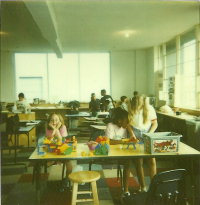
Chinese people, I learn, date the history of modern China to only 1978. In these 32 years they have built a great Industrial society, the dominant producer of goods on our planet. This has given hundreds of millions things they never dreamt of before. Cars. Refrigerators. Apartments in the sky and, for a lucky few, fabulous wealth. (This is Zhang Yaqin in 1978. He is now global vice president for Microsoft, and heads its Chinese research group.)
What built China? Capitalism, we say. Order, they say. In fact is was both. Capitalism needs order just as liberty needs order. Our Constitution gives us Ordered Liberty, not "freedom." It is a system under which we set the limits, and where we have the power to both enforce them and change them. But there are limits. Without law and order capitalism as a system can't exist.
China's government is many things. It is complex, it is opaque, it is bureaucratic, it is powerful. The one thing it's not is communist. Chinese people have fewer guarantees of health care than we do. Everything is a competition. Getting more than a rudimentary education requires passing an ever-harder series of exams. The price of failure in anything is incredibly high. Everyone is a slave to the market, not the party, and the "oppression" we complain of there is the last thing from most minds.
But there's another absolutely vital point you must know about China. They have many more problems than we do, much bigger problems, and most people there know it. There are tensions between the fast-developing coast and the interior. There are ethnic problems. There is pollution. There is the problem of an economy that must slow and a currency whose price must rise, and wherever its leaders turn lies the possibility of chaos large and small.
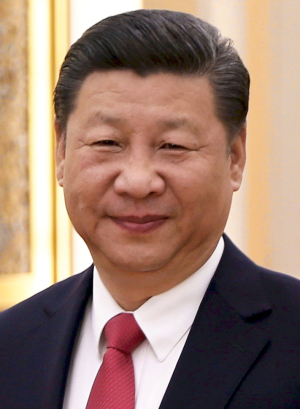
There is no doubt who has the better hand to play between Hu Jintao and Barack Obama. It's Obama. It's us. (To the left, Hu's expected successor, Xi Jingping.)
It is this knowledge that needs to guide our hand.
We have an opportunity to turn today's great competition into something both sides can win. We remain the stronger side. We can make concessions.
But concessions don't matter unless they're offered in a spirit of equal humanity. We need to learn more about each other -- our governments, our elites, our media, our people. On both sides.
We need more honest translations of what Chinese are writing, and they need more honest dialogue from us. Both sides need to understand the needs of the long term, the need of our grandchildren to have a breathable atmosphere and drinkable water, and the need of China to evolve into a post-industrial society, not just an industrial one.
The Internet is our secret weapon in that, and while we can protest China's "great firewall," is must be from an understanding that the effort is self-defeating on their part. The great challenges facing both sides require free inquiry, free minds and open hearts if they're to be solved. And solutions can come from anywhere, from anyone. Building walls against possible solutions is building a wall against yourself.
We can be more open, and from that example so can they.
My point is the enemy in this case is not China. It's not China's government, not its people, not its businesses. The enemy is fear, our fear of them, their fear of us. It's the same enemy I faced 35 years ago, the same fear my friend faces every day of his life.
Engagement is the victory. Isolation is the enemy.
Recent Comments