

Following is the essay you can designate as Volume 10, Number 18 of
This Week's Clue, based on the e-mail newsletter I have produced since
March, 1997. It would be the issue of April 23 30.
Enjoy.

There is a direct link between the values underlying modern software development, modern business practices, modern academic practices, and modern politics.
If you follow the threads you can be
current in any of these subjects.
In all these areas it is the values
made possible by the Internet which are ascendant.
- In software they call it open
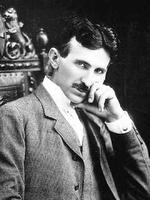
source. (That's Richard Stallman at right.) Rather than keeping code secret, and forcing people to
license it under terms that don't even require that it work,
companies publish the code publicly and sell support. In return
communities contribute improvements, the product gets better faster,
and the best contract, the GPL, assures the program's creator they
benefit from all those improvements. - In business practice they call it
the Economics of Abundance. The agents of the seller are no longer
the masters of the market. Now it's the agents of the buyer who are
most important. Newspapers fade, Google rises. And those who take
this lesson forward will rise to the top of the business heap. - In academic practice, which until
recent decades prided itself on the free sharing of knowledge,
there's growing pressure to return to that practice. When the Bill
and Melinda Gates Foundation insisted on the sharing of AIDS
knowledge as a condition for grants last year, this was an important
turning point. The wholly-proprietary model of university research,
which grew many colleges into multiversities over the last decade,
is under threat. - In politics I call this the
Internet Thesis. It is the real power behind the Obama candidacy. He
doesn't lean against the old Thesis of Conflict, as Hillary Clinton
does, and he doesn't face it head-on, as John Edwards does. He
simply denies it exists, talks about consensus, and millions of
people understand.
All these trends are connected by what
Al Gore once called the “Information Superhighway.”

In some ways it was a great analogy.
The Internet over the last decade has become essential
infrastructure, as important or more important than railroads, air
routes, highways or ports. When the roads are jammed you can
telecommute. Our needs for warehouses are going down, thanks to the
Internet, and containerization is moving to the consumer market,
thanks to the Internet. Change moves faster-and-faster,
faster-and-faster, not just because of Moore's Law but because of the
Internet, which embodies the possibilities of that Law.
In other ways Gore's analogy fails.
Because the Internet is more than an economic event. It is the
supreme cultural, political and intellectual event of our time.
When we look back on this era, I
believe, historians will see an intimate connection between the rise
of the Internet and the Global War on Terror. The GWOT was a
reaction, by both the West and the Muslim World, against the
accelerating modernization the Internet made possible, and which it
makes economically necessary.
But the Internet's power cannot be
denied. The oil producing world continues to flail in economic
misery, the United States falls further-and-further behind in the
economic race, both dragons are locked in mortal combat while the
rest of the world races ahead. Europe races ahead. China races ahead.
India races ahead. Even Latin America is racing ahead.
Terrorism really has nothing to do with
the present conflict. It is a war of reaction, against the 21st
century notion of constant, accelerating change which the Internet
makes necessary. Rather than deal with intellectual ferment, or
academic sharing, or business change, or open source, the forces of
reaction kill people, and in killing terrorize the rest of us into
killing as well.
This is the true mark of a global
political thesis expiring. As I've written in my Internet Thesis work
at www.danablankenhorn.com, every
generational thesis in American history has died in violence. The
same is true on a worldwide basis. Mass industrialization at the
start of the 20th century led to two World Wars. The birth
of modern science, known as the Enlightenment, gave birth to
countless wars, and eventually to new types of war, in Crimea and
here in America. The Renaissance also brought war in its wake.
When an old order faces extinction it
always lashes out in bloodshed. That's what Bush's war really is, not
a struggle against Islam but a struggle by both Islam and militant
Christianity on behalf of the old order, the unchanging, the
immutable, the industrial, the proprietary.
All are threatened by the rise of the
Internet.

And the way to win this struggle is to
stop the killing and fight the intellectual, economic, and moral
battles the Internet makes possible. Until Americans and their
government engage in the real struggle of our time, the Age of the
Internet and the War Against Oil, we're headed for the exits, and the
fate Latin America's generals gave that great continent throughout
the 20th century.
Stop fighting the war. Use the
Internet. Fight the war against the war. It's the only way to win.






Please change the reference to free software, or better yet, software libre. This conveys the true concept, liberty, to which Richard Stallman has dedicated his efforts. He DOES NOT associate himself with open software which does not respect and promulgate freedom.
Please change the reference to free software, or better yet, software libre. This conveys the true concept, liberty, to which Richard Stallman has dedicated his efforts. He DOES NOT associate himself with open software which does not respect and promulgate freedom.
Richard Stallman asked me to post the following comment for him:
In 1983 I founded the Free Software Movement, a movement to reclaim for software users the freedom to change and share the software we use. This means correcting the social problem which is proprietary software, licensed so as to keep the users divided (it’s illegal to redistribute) and helpless (users don’t have the source code).
This is a movement for social change, so it relates directly to politics. We seek to eliminate the unjust power of software developers over the software’s users.
After the free software GNU/Linux operating system caught on, the term “open source” was proposed in 1998 as a way to talk about the software while forgetting the deeper values. It is used by those who don’t want to rock any ethical boats, but not by me. Please don’t say I support “open source”, because it isn’t true.
For more explanation about this difference, see
http://www.gnu.org/philosophy/open-source-misses-the-point.html.
Richard Stallman asked me to post the following comment for him:
In 1983 I founded the Free Software Movement, a movement to reclaim for software users the freedom to change and share the software we use. This means correcting the social problem which is proprietary software, licensed so as to keep the users divided (it’s illegal to redistribute) and helpless (users don’t have the source code).
This is a movement for social change, so it relates directly to politics. We seek to eliminate the unjust power of software developers over the software’s users.
After the free software GNU/Linux operating system caught on, the term “open source” was proposed in 1998 as a way to talk about the software while forgetting the deeper values. It is used by those who don’t want to rock any ethical boats, but not by me. Please don’t say I support “open source”, because it isn’t true.
For more explanation about this difference, see
http://www.gnu.org/philosophy/open-source-misses-the-point.html.