

Think of this as Volume 16, Number 16 of A-Clue.com, the online newsletter I've written since 1997. Enjoy.
 What those who follow politics in the short term don't understand, and those who take the long view do, is how you can see which side is rising or falling quite easily, through a simple study of isolation and engagement.
As political assumptions and the industries behind them fade and die, those who follow those assumptions tend to become isolated from the wider world.
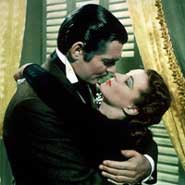
You can see this easily in retrospect. Hard reality turns to sepia. The Confederacy became the “lost cause” because slave-owners became isolated from the reality of mechanization. The Gilded Age gave way to the Progressive Era as speculators and the native-born became isolated from the real life of the industrial economy, while those who embraced change prospered and defined a new era of finance.
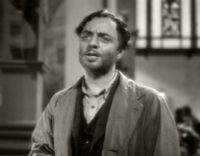 Anyone who has seen a screwball comedy of the 1930s can see how isolated the rich were from the rest of us – enough to be the butt of jokes. A major trope of those comedies was the spoiled, wealthy woman getting her comeuppance from a down-to-Earth man. (As in "My Man Godfrey," right, with William Powell.) And the hippies' isolation from the world became increasingly obvious as the 1960s turned into the 1970s. Cheech & Chong were to be laughed at and pitied, not emulated.
Each turn of the historical wheel brings this isolation into focus, and how each group went wrong becomes increasingly easy to see as we move away from the point of crisis and into the new era. For the hippies, it's clear that their isolation began with a suburban upbringing, one divorced from market realities. This is what drove your Nixon-era parents crazy about you – get a job was another way of saying “engage with the real economy.
Today's isolation is also found in the suburbs, but it's an adult isolation. When you live in a cul de sac you can be completely isolated from other people. You don't see them where you live, you barely acknowledge them as you drive to work, and other realities are masked in the office by work faces and easily-understood roles. On weekends you're either playing with like-minded friends or praying with like-minded parishioners. Small wonder how easily religious or political broadcasting can shape your mind – there's no reality to match it to.
Contrast this cul de sac life with what anyone who lives in a city, no matter their income, deals with. We see one another on the street. We see them on the subway or the bus. We know where the other lives, and learn which individuals can be trusted, which must be avoided. City dwellers are engaged in the marketplace of people, of ideas, and of society as a whole.
As the center of economic life has moved from the office complex to the research campus, the value of this engagement has increased, and the economic penalty for disengagement has increased. This last recession hit hardest in the suburbs, as whole layers of educated management were taken out. If you were on a campus, either directly or tangentially, chances are you didn't notice.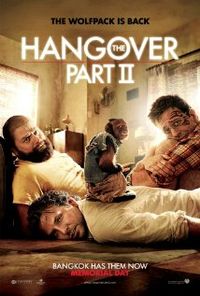
Despite the Internet, the competitive business of discovery and exploitation of discovery requires intense, personal interaction, teamwork that goes on 24-7 and can't be isolated in a 9 to 5 workday. The new economy, in other words, favors cities, the creative classes, and disadvantages those who live and work in isolation to their fellow beings.
If you look at the comedies of our own time, you can see these themes start to play out as tropes. Who are we laughing at? Who is the butt of the jokes? In most cases it's suburban men, suburban women. Now, who are our heroes? Mostly doctors and lawyers and cops who work in cities, people with a scientific research bent.
These are social clues to political change. They have nothing to do with particular candidates or issues. But they will tell you which way the wind is blowing and as always it's blowing away from isolation, toward engagement.






Dane – you’re a true renaissance man. We, as readers, never know what to expect when a new post of yours pops up, but it’s always entertaining.
I’m curious – How did the idea for this post come up? Was it during some of your financial research or was this just something you’d been thinking about?
Dane – you’re a true renaissance man. We, as readers, never know what to expect when a new post of yours pops up, but it’s always entertaining.
I’m curious – How did the idea for this post come up? Was it during some of your financial research or was this just something you’d been thinking about?
I couldn’t be happier with the results of agreement between isolation. But I must be happy with the proposal of engagement and that would be the happiest day when that happened. Expertise in planning has really helped the brand recognition and brought in a lot of business for future.
I couldn’t be happier with the results of agreement between isolation. But I must be happy with the proposal of engagement and that would be the happiest day when that happened. Expertise in planning has really helped the brand recognition and brought in a lot of business for future.
Hangover Part-I was a full of comedy. It creates great humorous with inspirational message. Such a nice comedy film i have never seen before.
Hangover Part-I was a full of comedy. It creates great humorous with inspirational message. Such a nice comedy film i have never seen before.
Dane – you’re a real rebirth man. We, as visitors, never know what to anticipate when a new publish of yours bursts up, but it’s always interesting.
Dane – you’re a real rebirth man. We, as visitors, never know what to anticipate when a new publish of yours bursts up, but it’s always interesting.