 Frank Rich of The New York Times has offered a thoughtful, provocative piece about The American Press on Suicide Watch.
There's only one thing wrong with it.
Mr. Rich still doesn't know how his employer's business works.
I, on the other hand, actually took a publishing course at Medill, so let me state this as clearly as I can. No one pays for their newspaper. They pay for its delivery, for the infrastructure of trucks and men who get that paper from the printing press to your door.
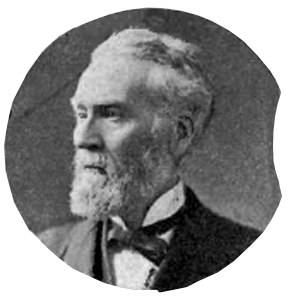
Newsgathering costs have always come from advertising. Always. That's how it was in Joe Medill's day, and that's how it is a century later.
Where newspapers screwed up was in forgetting the purpose of advertising and their business role. The purpose of advertising is to sell stuff. A publisher's job is to help the businesses he is advocating for and organizing to sell stuff.
The ad space on any page, whether real or virtual, is just the last piece in this puzzle. The ad space is a billboard which the advertiser fills.
Why does he fill your empty billboard? This is the question newspapers used to be very good at answering. He fills it because the medium can prove that an ad placed with it will reach his target market, and that some of the people in that market will act on the ad.
Print newspapers, and magazines, long answered this question with surveys. Not just surveys of their readers or their advertisers, but surveys of the target market. These surveys would show, for instance, that "46% of the people who will buy a new car next year in New York read The Times," or that "you can reach 50,000 millionaires for less with The Times than with any other medium."
Ad agencies used these kinds of surveys in planning campaigns. They would say, "we have to reach X number of people who have Y characteristics Z number of times," and if their creative was right it would result in $ worth of sales.
Newspapers, in the print era, were never just at the billboard end of the sales funnel. They actually went deeper down the funnel than that.
 What's ironic here is that the Web lets you go all the way down the funnel, even out the other end. The Internet can advertise goods, can give you all the information (both biased and unbiased) you need to make a buying decision, it can enable that purchase, and it can provide the back-end customer service as well.
 The newspaper model pushed for maybe 5% of the marketing pie, even as I've described it. (The model Rich describes, the ad space itself, is just a fraction of this 5%.) The Internet offers 100%.
I gave this talk to newspaper editors over 15 years ago, and I always concluded it with a question. "Now, how hungry are you?"
Not very hungry, it turned out. Newspaper Web sites have failed to penetrate their target markets, publishers have failed to organize those target markets, and thus they are competing for that fraction of 5% of ad budgets Rich described, not even the full 5%.
Why is that? Several reasons:
- Newspaper Web sites did not engage the reader. They lectured instead.
- Newspaper Web sites never got traffic from as much of their potential audience than print newspapers had.
- Newspaper publishers never engaged in the serious blocking-and-tackling for ads online that they engaged in off-line.
- Newspapers never approached the Web on its own terms, only on their terms.
The failure of newspapers to succeed online is a business failure. It's a failure that cuts across all areas of the business, from the newsroom to the ad side to the executive suite. And this failure has been industry-wide.
The arrogance and ignorance of newspaper people regarding the Internet has been nothing short of scandalous. What's clear is that, even today, it's shared by even the smartest people in the place, columnists like Frank Rich.
So I'm going to repeat myself and describe how anyone, with some money, drive, and ambition, can become a news mogul starting today:
- The mission of your editorial effort is interaction. Not just two-way interaction, but interaction within the audience.
- Every so-called story is the start of a discussion. Reporters must respond directly, personally, and quickly to anyone who claims to add something real to it, so that the story builds within the Web container.
- The measure of your success is not the number of "hits" you have, but the loyalty of your target audience to your Web site. You want to be the first choice your target market makes when they want to find out about whatever you are offering.
- You do not just sell advertising. You are the marketing partner of the businesses which do business with you. Your job is to help them grow.
 Notice that I wrote anyone can do this. If you don't have any capital, you can do this by yourself, if you target narrowly enough. Don't start with your city, in other words. Start with your neighborhood. Or an industry within your city. Or an unusual lifestyle interest.
And don't start from the editorial side. What we need are publishers, people who are focused first on the fourth element above, on luring business to the people who choose to do business with you. Make others successful and they will make you successful.
We don't need another Frank Rich. We need 1,000 Joe Medills.