Think of this as Volume 11, Number 40 of A-Clue.com, the online newsletter I've written since 1997. Enjoy.
The most telling fact of the last week is that Wall Street and big business advocates have been forced to re-think their knee-jerk support of the Republican Party.
That's because, in its embrace of its Church Street wing, the GOP has had to eat increased amounts of Populism to stay in power. Populism forced the party to end its Bush-Dole feud in 1988 in order to pivot against Pat Robertson. Populism was let into power only because Bush the Lesser was a Bush, and thus it was assumed he would not crash the ambulance through populist tendencies.
But Bush did crash the ambulance. Wall Street lost some of its enthusiasm, but remained strong enough to see John McCain to victory over Mike Huckabee.
Then came Palin. And the bailout bill.
Sarah Palin was put on the ticket because she could bring the Populist wing of the Republican Party enthusiastically on board. Regardless of what you feel about her personally, her political personality is right out of the William Jennings Bryan playbook. Small town, producers of basic goods (oil and moose), church-going people with a thick streak of bigotry.
When kids are taught American history, they're taught about the rise of Jefferson, which was essentially Populist, and the Party of Jackson, which was also Populist. By that I mean they were distrustful of big institutions, big businesses and government authority. They may even be taught that, in the run-up to the Civil War, the North represented manufacturers and the South farmers.
Here is what they are not taught.
Since 1860 Populism has been the losing card in American politics. Wall Street was Republican through the age of FDR, switched to support Democrats during the New Deal and World War II, then gradually fell back to the Republicans, who have now been the majority party for a generation.
The most important political event of the year may have been Monday's House vote on the bailout bill. House Republicans, taking a cue from their Populist constituents, went against the bill 2-1. They lied to their leaders, who then lied to the Democrats. The deal Wall Street needed could not get done.
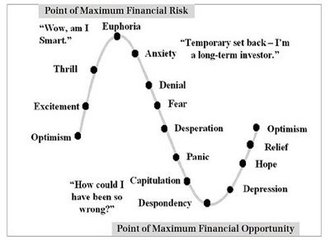
The reaction, on CNBC, was shock, apoplexy, followed by all the stages of grief. The anchors there are as Republican as those at Fox News, albeit without the populist sugar coating. So are their guests. Neither could believe that their party had deserted them, that the people they put into power were calling them names.
Even on the vote last night which resurrected the bill, 14 of the 25 no votes came from Republicans. The party's standard-bearer, Sen. McCain, did vote the "right" way, but grudgingly. Many on Wall Street saw his grandstanding of the previous week as scuttling a deal as it was being done, and he refused to explain himself when given a chance in debate.
By contrast, Barack Obama delivered a 13-minute speech supporting the bill. It may have been the most important speech of the year so far. In it he set terms by which the Democratic Party will support Wall Street's interests, not just now but in the future:
Recent Comments